Skip to the page
Honest CarrolltonWater Damage RestorationCall (678) 270-2458

Roof leaks and wind-driven rain

Storm and Roof Leak Water Damage

Water coming in after a storm through the roof, a window or a damaged wall: stay clear of downed lines, photograph the damage first, and call (678) 270-2458 to describe it.

Call (678) 270-2458
What you may be seeing

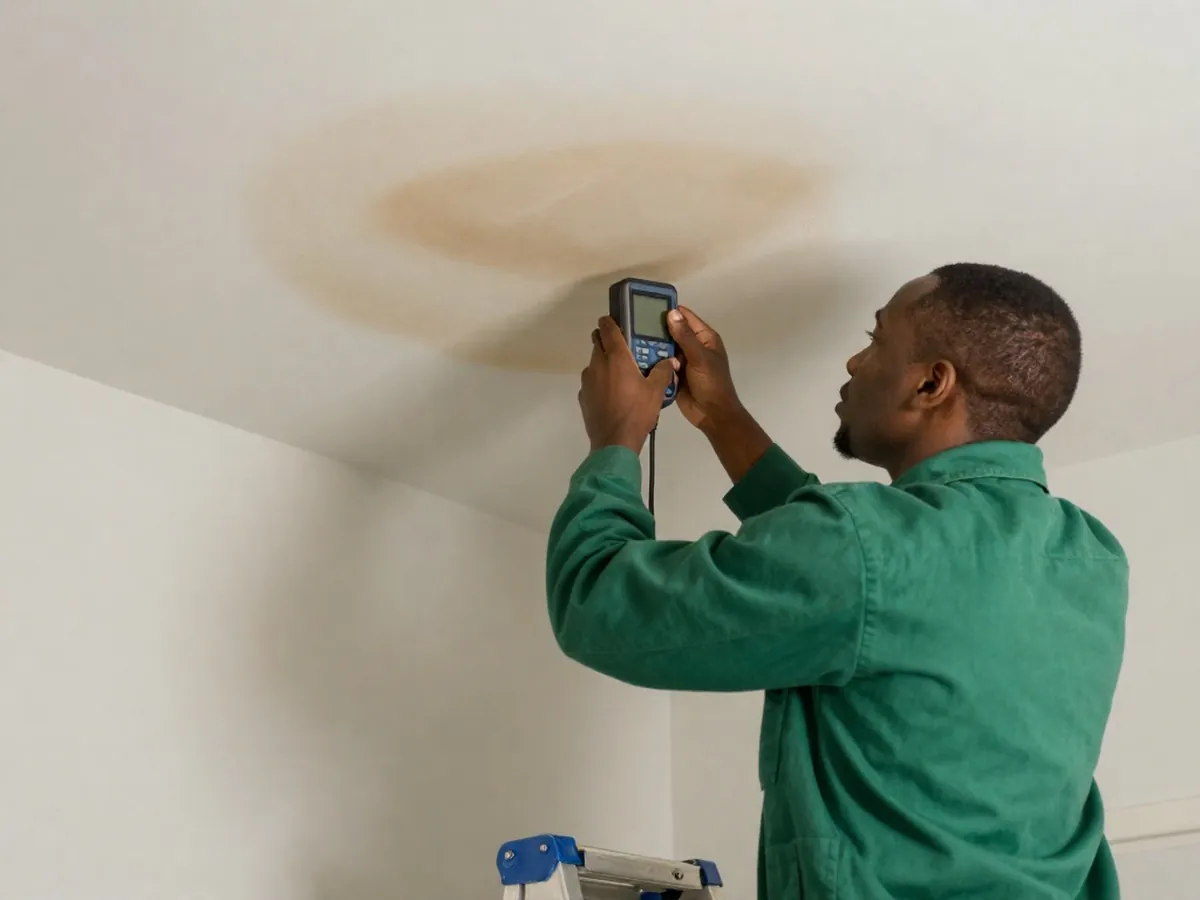
  • A stain or drip in the ceiling that showed up after a thunderstorm
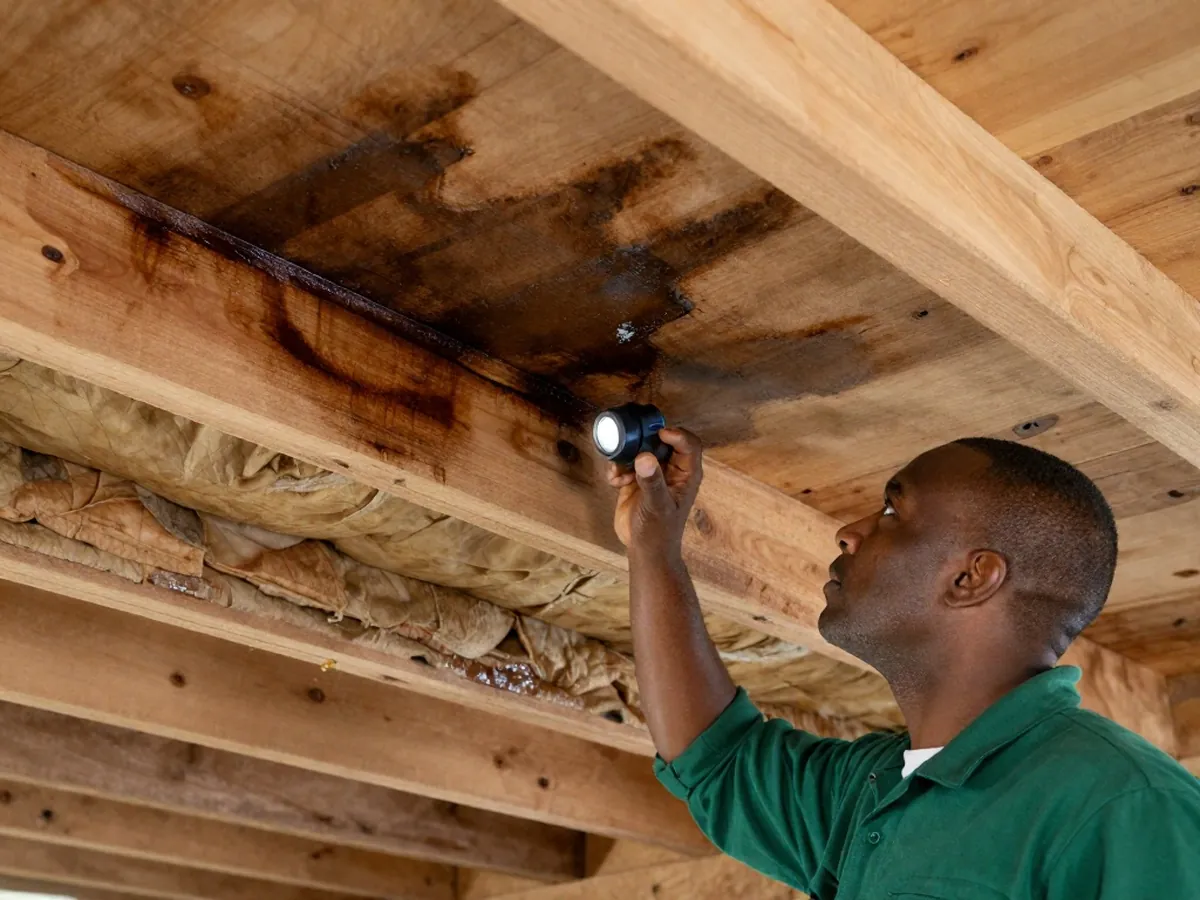
  • Wet insulation or dark staining on wood framing in the attic
  • Missing or lifted shingles after high wind, with daylight or damp patches inside
  • Water running down the wall under a window or door when wind pushes rain sideways
  • Gutters that overflowed and sent water down the outside wall
Technician shining a flashlight on a water-stained roof deck in the attic

What the photo shows

Wet framing under the roof

A technician in a green shirt looks up with a flashlight at a dark water stain on wood roof framing, with insulation packed between the beams. The dark band marks where water has run along the wood. Insulation in that spot can hold the water, as the next lines explain.

Walk away and get help if

  • A downed or low-hanging power line: keep well away, treat it as live, and dial 911. Georgia Power's outage and downed-line number is 888-891-0938.
  • A ceiling bowing under a roof leak: do not stand beneath it, and dial 911 if the drywall or plaster begins to drop.
  • Water at light fixtures, outlets or the panel: leave the room, keep the switches alone, and dial 911 if you see sparks or smoke or smell burning.
  • A wet roof, a ladder or an attic floor: do not climb up to look. Gas smell after a storm: leave the house and phone Atlanta Gas Light at 877-427-4321 from outside.

Safe things to look at

These are looks and touches, nothing more. Stay with the ones that feel comfortable, and skip any that put you near water, wiring or a ladder.

  • From the ground, look along the roofline for missing or curling shingles, as UGA's checklist describes.
  • Check ceilings and the tops of windows for new stains, and photograph each with the date.
  • Once the weather clears, walk the outside and photograph the damage before any temporary repair.
  • Look at the gutters and downspouts for debris and for sections that have come loose.

What often sits behind it

  • Wind that lifts or strips shingles. The NWS counts 58 mph or more as severe.
  • Hail of an inch or larger, the NWS's other mark for a severe storm
  • Limbs or a whole tree dropped on the roof or siding
  • Flashing at a vent, chimney or valley that rain gets behind
  • Gutters and downspouts that are clogged or pulled loose. UGA's checklist asks for them to be intact and kept clear of debris.

When a storm leak cannot be ignored

  • Daylight or a damp patch shows in the attic beneath missing shingles.
  • The ceiling below keeps staining between storms, or feels soft.
  • The insulation under the leak is soaked. The Pennsylvania DEP says insulation can wick water well above the point of contact, and NDSU Extension says it will hold water for months.

After-storm mistakes

  • Going outside before looking for downed lines. Georgia Power says to assume every downed line is live and life-threatening.
  • Climbing onto a wet roof to look around.
  • Putting on temporary repairs before the damage is photographed, which Georgia's insurance office asks for first.
  • Driving or walking through floodwater to reach the house. The NWS says it is never safe.

Wind in July, hail in May

  • The NWS Peachtree City office calls damaging wind the most common severe weather in north and central Georgia, peaking in July.
  • Hail peaks in May, with April a close second, and supercells are most common in spring.
  • Carrollton's July normal is 4.45 inches of rain, and the year runs to 53.48 inches.

Questions, answered briefly

How urgent is a leak that showed up after a storm?

On the checklist, a ceiling that sags or water showing at a light fixture scores 8 to 10, which means leaving the room and dialing 911 if it gives way. A drip into a bucket is a 4 to 7. A stain that dried after one storm is a 1 to 3, worth photos and a look at the roofline.

What makes a Georgia thunderstorm severe?

The National Weather Service office at Peachtree City says severe means hail of at least 1 inch, winds of 58 mph or more, or both. Damaging wind peaks in July across north and central Georgia, and hail peaks in May with April a close second.

Do storm leaks in Whitesburg or Villa Rica count?

They do. The line serves Whitesburg water damage and water damage in Villa Rica as well as Carrollton. Photograph the damage, then call (678) 270-2458 and tell them where the water got in.

Roof and wall repair after a storm

Roof and wall repair after a storm sits with the roofing trade and the building office, not with the water crew. The town-by-town office list is on Before you hire.

The job next door